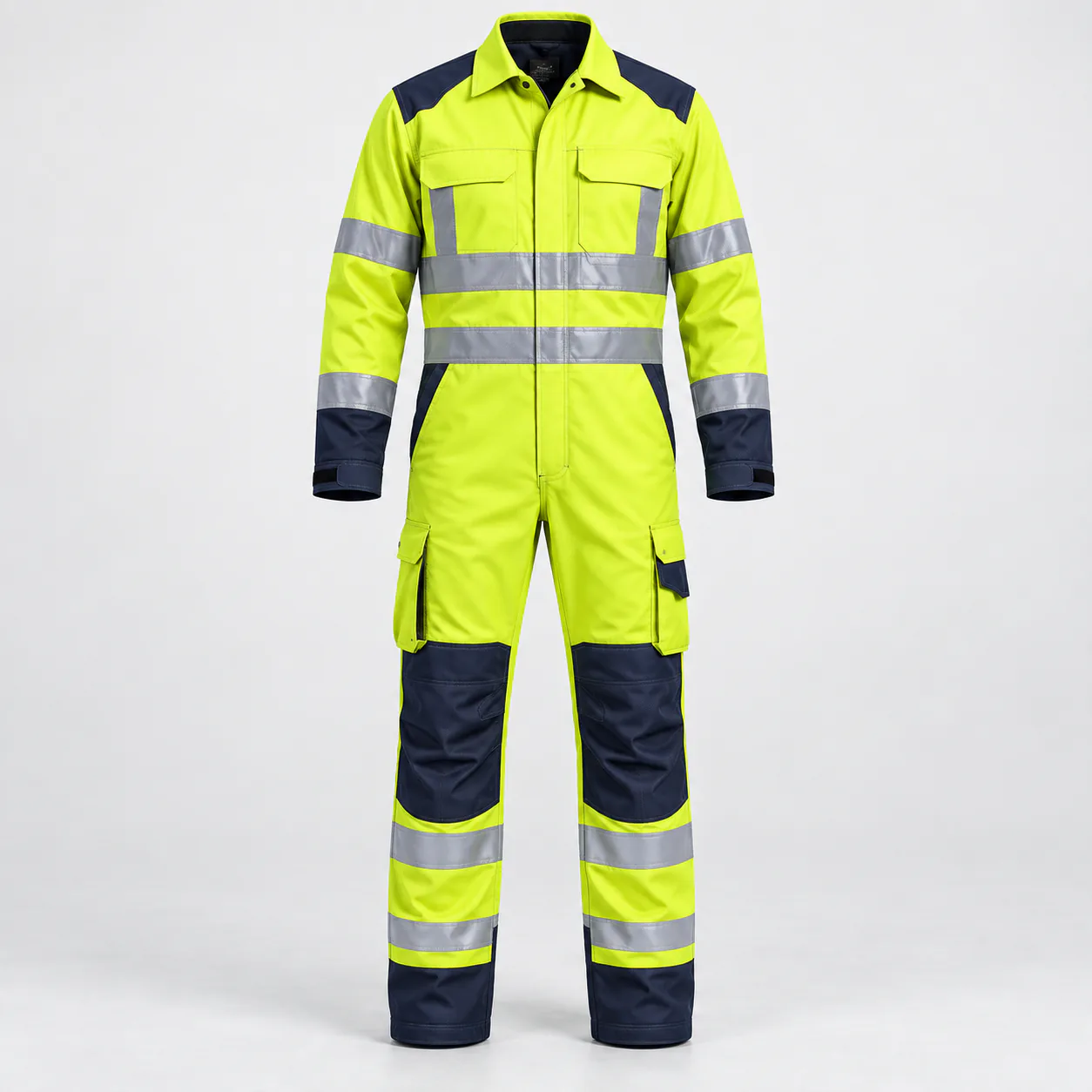
FR Industrial Coverall
- Material
- FR cotton or aramid
- Use
- All Season
Search by product, use or material. Open a style to review known details, original images and customization routes.
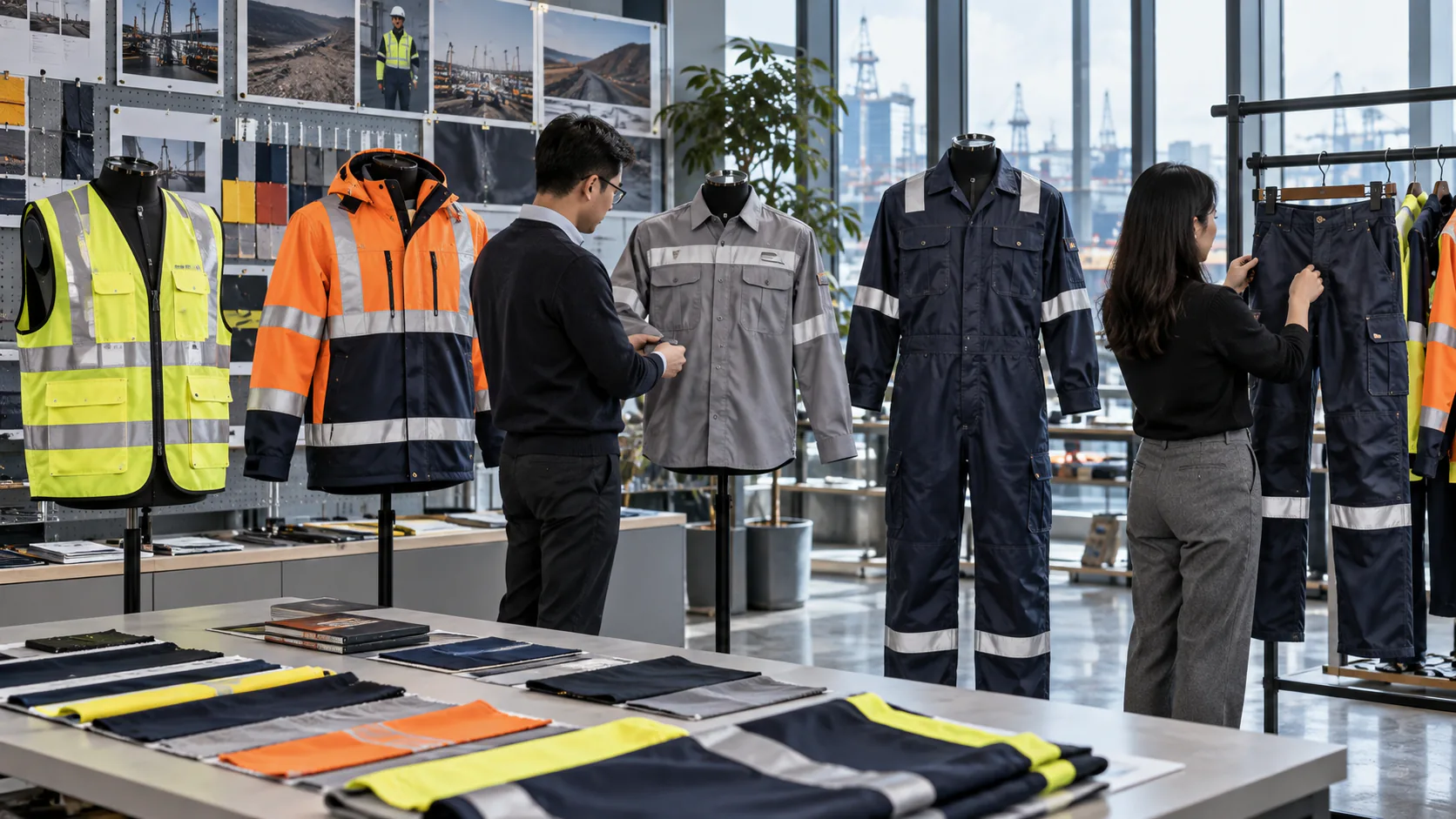
Compare intended use, mesh or solid construction, pocket access and layering needs before reviewing the exact style.
Confirm each finished configuration and its applicable documents before making a performance claim.
Coveralls give one-piece coverage for dirty, hot or hazardous work. A sleeved, full-length coverall with banded arms and legs can reach high classes on its own, and FR coveralls serve flame and arc hazards once the finished garment is confirmed against the required standard.
| Style | Material | Use | Direction |
|---|---|---|---|
| HV-C610 Industrial Coverall | FR cotton or aramid | All Season | FR / Industrial |
Yes, when the finished coverall meets the Class 3 requirements. Under ANSI/ISEA 107, that means at least 1,240 in² of background and 310 in² of retroreflective material with banded sleeves. Under EN ISO 20471, Class 3 needs 0.80 m² and 0.20 m² with banded sleeves or legs.
The HV-C610 follows an FR product direction in FR cotton or aramid. Flame resistance is confirmed for the finished configuration against the standard the buyer requires, such as NFPA 2112, ASTM F1506 or EN ISO 11612, with FR-compatible tape, thread and trims.
Measure wearers over the layers worn underneath and compare with finished garment measurements, especially chest, torso length and inseam. Check reaching, kneeling and climbing on a sample, and confirm the smallest size still meets the required class.
The standard factory MOQ is 100 pieces, and fully customized products have an MOQ of 300–500 pieces, depending on the approved specification. In-stock products ship within 7 days, customization of in-stock products is completed within 15 days, and full customization follows a 25-day schedule. Any style-specific exception is confirmed in the quotation, and samples and pre-production samples are confirmed case by case through an inquiry.
Record climate, movement, tools, layers and any site requirements.
Review coverage, storage, closure, reflective layout and wearer comfort.
Match the finished colour, material, size range and documentation to the intended use.