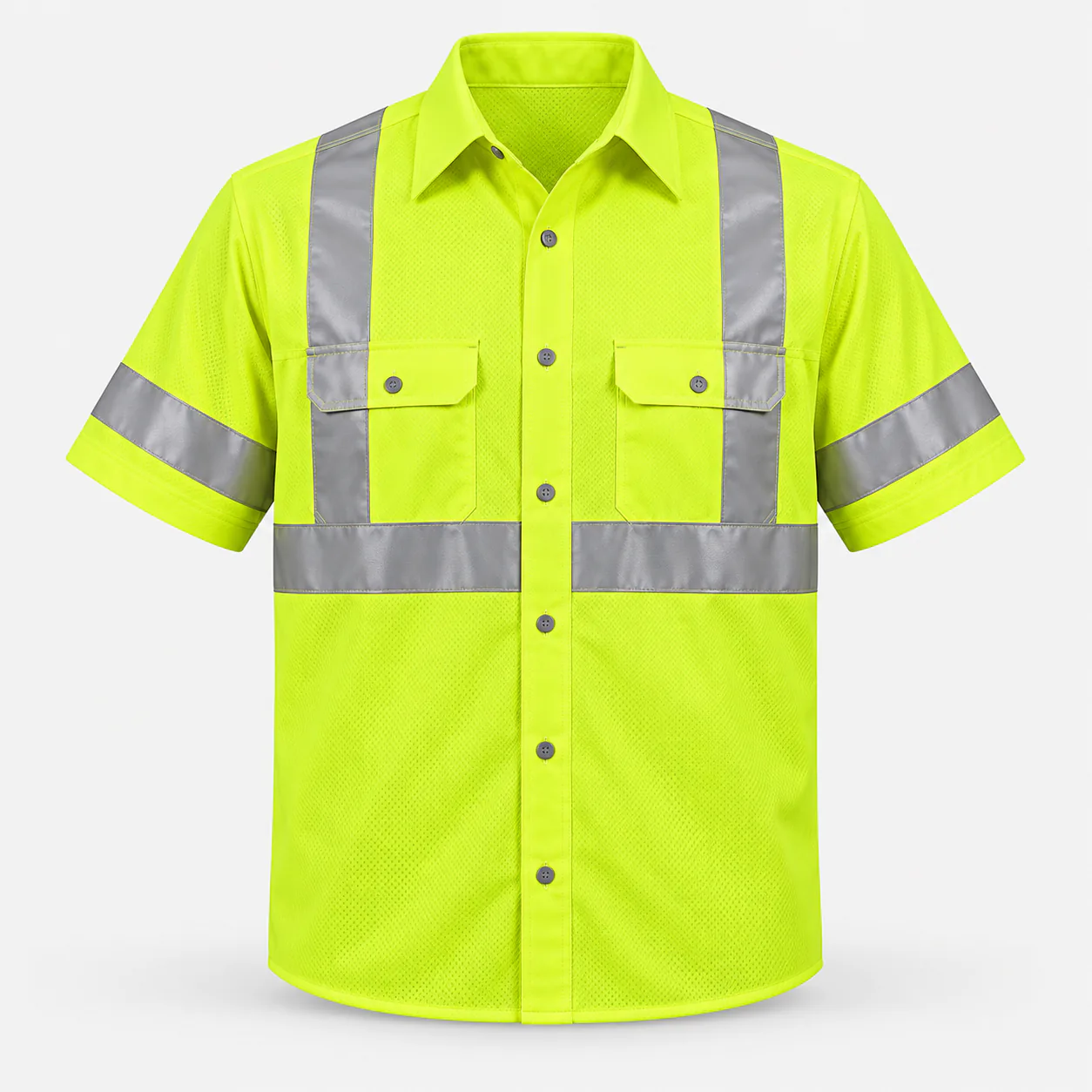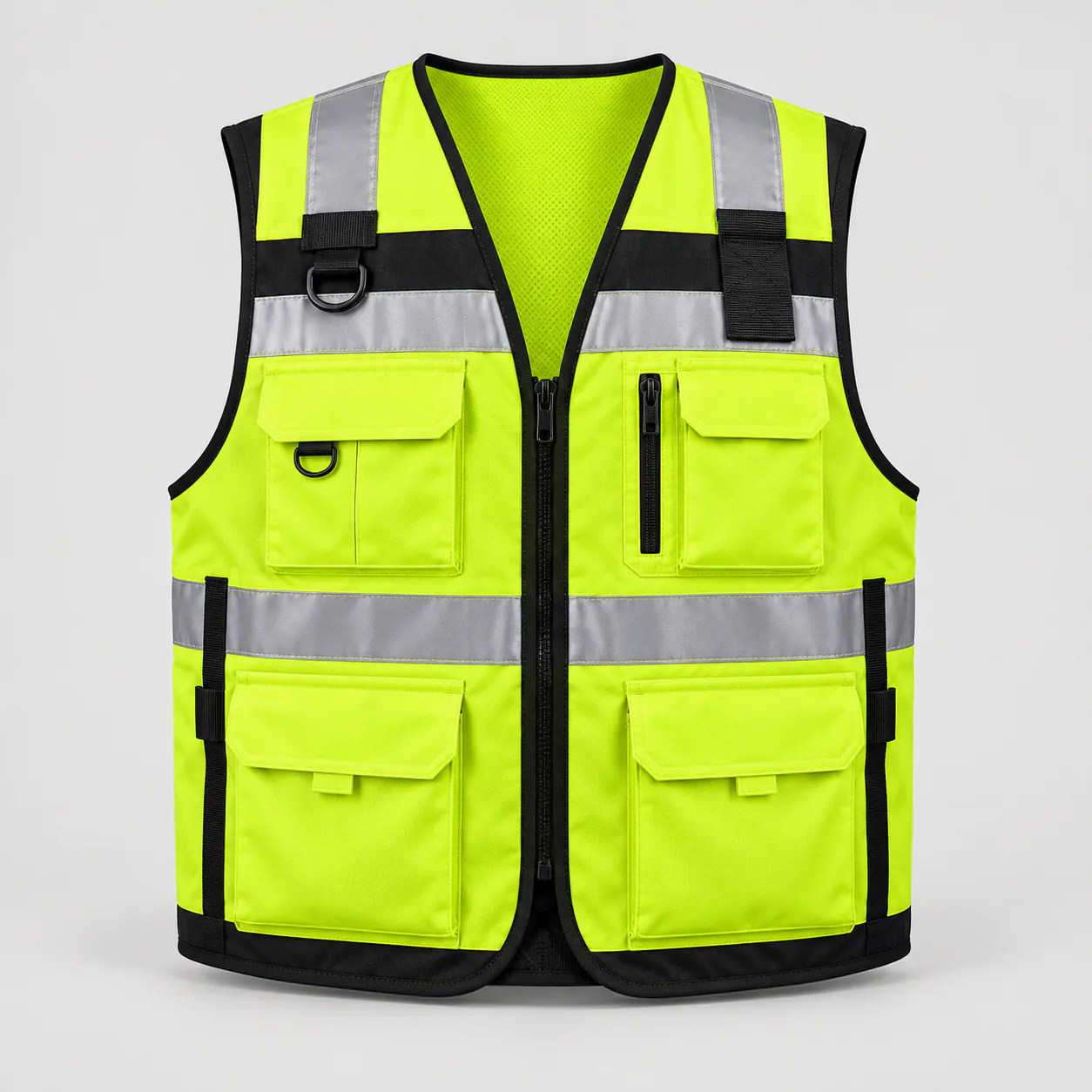
5-Point Breakaway Utility Vest
- Material
- Polyester mesh
- Use
- Warm Weather
Select workwear around heat, movement, tool access and changing site conditions.

Product recommendations are starting points. The buyer’s risk assessment, intended use and final product documentation determine the approved specification.
Construction sites mix moving plant, delivery vehicles and changing layouts. OSHA lists struck-by hazards among the Focus Four hazards in construction, and it requires employers to provide protective equipment wherever hazards make it necessary. Since January 13, 2025, 29 CFR 1926.95(c) also requires PPE to properly fit each affected employee.
Where crews work within the right-of-way of a highway work zone, the MUTCD requires ANSI/ISEA 107 Class 2 or 3 apparel. On other sites, the employer’s hazard assessment and site rules set the class, colors and any breakaway or flame-resistance requirement.
| Role | Typical garment | Why |
|---|---|---|
| General labor | Mesh or breakaway vest | Airflow, light kit |
| Equipment operator | Breakaway vest | Releases if snagged |
| Supervisor | Vest or jacket with storage | Radio and documents |
| Hot-weather crew | Vented long-sleeve hi-vis shirt | Sleeves without a vest |
| Cold-weather crew | Hi-vis softshell or insulated jacket | Outer layer carries class |
It depends on the work. Within the right-of-way of a highway work zone, the MUTCD requires ANSI/ISEA 107 Class 2 or 3 apparel. On other sites, the employer’s hazard assessment and site rules decide the class and color.
A breakaway vest separates at the shoulders and sides when pulled, so it releases if caught by machinery or a vehicle instead of dragging the wearer. Check the release behavior and keep logos and tape clear of the release seams.
Yes. Under 29 CFR 1926.95(c), effective January 13, 2025, employers must select PPE that properly fits each affected employee. Plan a size range that covers the crew, worn over the layers used on site.