Start with the baseline. MUTCD 11th Edition Section 6C.05 says all workers within the right-of-way in a temporary traffic control zone, including emergency responders, shall wear ANSI/ISEA 107 Performance Class 2 or 3 apparel, and flaggers should wear Class 3 at night. Then build the range by role, shift, weather and carried equipment, and confirm each finished garment and ensemble for the order.
What does the MUTCD require?
Section 6C.05 of the MUTCD 11th Edition covers high-visibility apparel in temporary traffic control zones. All workers within the right-of-way who are in a TTC zone, including emergency responders, shall wear apparel meeting ANSI/ISEA 107 Performance Class 2 or 3. Background material is fluorescent orange-red, fluorescent yellow-green or a combination. Retroreflective material is orange, yellow, white, silver, yellow-green or a fluorescent version of these. Flaggers should wear Class 3 at night. Firefighters exposed to flame, heat or hazardous materials may wear retroreflective turnout gear instead.
Where does OSHA fit in?
OSHA ties its construction flagger rule to the same manual. Under 29 CFR 1926.201(a), signaling by flaggers, including the warning garments they wear, must conform to Part 6 of the MUTCD. OSHA has also published an interpretation on high-visibility apparel in work zones, and its struck-by guidance covers vehicle and equipment hazards. Effective January 13, 2025, 29 CFR 1926.95(c) requires employers to ensure PPE is of safe design and construction for the work and is selected to properly fit each affected employee. Agencies and contracts may set stricter specifications.
Type R, Class 2 or Class 3?
ANSI/ISEA 107-2020 groups garments by type. Type R covers workers exposed to traffic in roadway rights-of-way or temporary traffic control zones, in Class 2 or 3. Type P, equivalent to the former ANSI/ISEA 207, serves emergency responders and law enforcement. Type O is Class 1 only, for workers not exposed to roadway traffic. Class 2 needs at least 775 in² of background and 201 in² of retroreflective material; Class 3 needs 1,240 in² and 310 in². A vest alone cannot be Class 3. Class 3 needs sleeves with retroreflective bands, or an ensemble such as a Class 2 top with Class E pants.
Match garments to crew roles
Roles carry different equipment and move differently. Confirm each role’s class with the employer’s hazard assessment and the contract.
| Role | Key needs | Garment route |
|---|---|---|
| Flagger, day | Long static shifts facing traffic | Class 2 or 3 vest or shirt |
| Flagger, night | Low light, headlights | Class 3 sleeved top or ensemble |
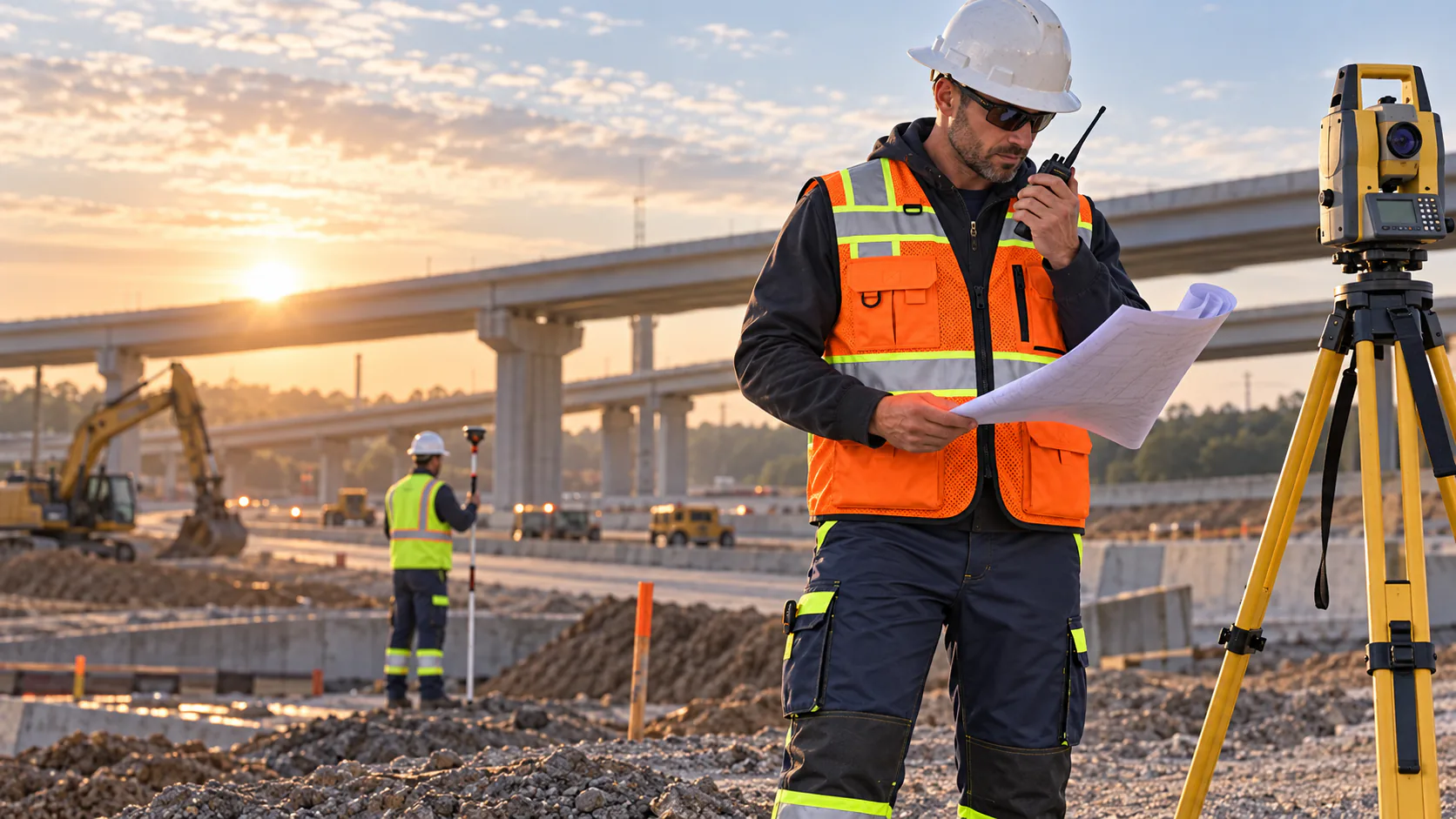
| Surveyor | Instruments, plans, tablet | Class 2 or 3 vest with storage |
| Supervisor | Radio, phone, site walks | Class 2 or 3 vest or jacket |
| Equipment operator | Cab access, snag points | Class 2 or 3 breakaway vest |
How should crews dress for night work?
At night, drivers see retroreflective material lit by their headlights, while fluorescent background color does its main work in daylight. Bands on sleeves and legs help outline a moving person. Class 3 adds banded sleeves, or reaches the class as an ensemble with Class E pants. Under ANSI/ISEA 107-2020, Level 2 retroreflective material has a coefficient of retroreflection of at least 330 cd/(lx·m²) at a 0.2° observation angle and 5° entrance angle. The 2020 edition also added an option to measure nighttime luminance. Keep tape clean and replace garments with damaged bands.
Plan weather routes
Each route must still give the required class in the outermost layer. A jacket worn over a hi-vis vest or shirt has to provide that visibility itself.
- Hot weather: a mesh vest over a breathable shirt, or a Class 3 vented shirt with sleeve bands.
- Cool and windy: a hi-vis softshell, or a vest sized to fit over a jacket.
- Cold: an insulated hi-vis jacket with sleeve bands. In Europe, EN 342 covers cold below -5 °C and EN 14058 cool conditions down to -5 °C.
- Wet: a hi-vis rain jacket with Class E rain pants. EN 343:2019 rates water penetration and breathability from class 1 to 4, with 4 the highest.
Coordinate storage, fit and branding
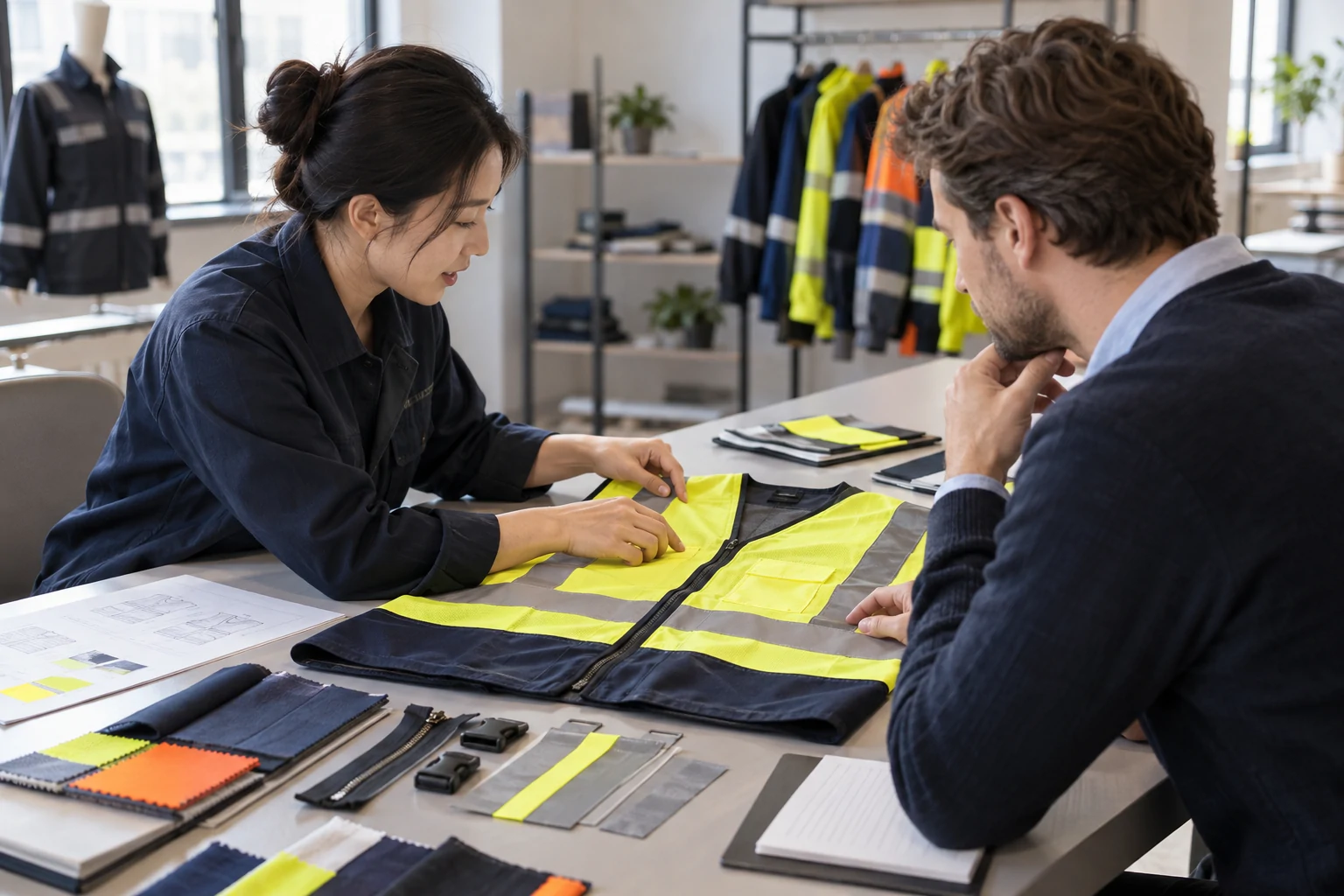
Keep sizing consistent across vests, shirts, jackets and pants so crews can reorder by size. Give each role the storage it needs, such as document pockets for surveyors and radio loops for supervisors, without loaded pockets covering tape. Match fluorescent shades across garment types, since different fabrics can dye differently. Place logos on background fabric, clear of bands, and confirm the smallest size still meets its class. Changing color, material, tape layout, pockets or logo placement means the finished configuration must be reviewed again.
What to send with a road crew inquiry
A complete brief lets the factory review the whole range at once.
- Roles, quantities and size breakdown for each garment.
- Required standard, type and class from the contract or hazard assessment.
- Shift pattern, including night work and flagging.
- Weather routes and the layers worn underneath.
- Carried equipment, logo artwork and placement.
Common questions
Do highway workers need Class 2 or Class 3 safety vests?
Under MUTCD Section 6C.05, workers within the right-of-way in a temporary traffic control zone shall wear ANSI/ISEA 107 Class 2 or 3 apparel, and flaggers should wear Class 3 at night. A vest alone cannot be Class 3. The employer’s hazard assessment and contract decide beyond that baseline.
Can a Class 2 vest and Class E pants make a Class 3 ensemble?
Yes. Under ANSI/ISEA 107-2020, a Class E item such as pants, bib overalls or rain pants worn with a Class 2 top forms a Class 3 ensemble. Class E items are not compliant on their own, so confirm the labels and documents for both finished garments in the order.
What hi-vis colors are allowed in highway work zones?
The MUTCD allows background material in fluorescent orange-red, fluorescent yellow-green or a combination. Retroreflective material may be orange, yellow, white, silver, yellow-green or a fluorescent version of these. Agency or contract specifications may narrow the choice, so confirm them before ordering a crew range.
What is the minimum order for custom road crew workwear?
At Safvero, the standard factory MOQ is 100 pieces, and fully customized products need 300–500 pieces, depending on the approved specification. In-stock products ship within 7 days, customization of in-stock products is completed within 15 days, and full customization follows a 25-day schedule.
Sources and further reading
FHWA Manual on Uniform Traffic Control Devices (MUTCD)OSHA 29 CFR 1926.201: signaling and flaggersOSHA 29 CFR 1926.95: criteria for personal protective equipmentISEA: ANSI/ISEA 107-2020 high-visibility safety apparelOSHA work-zone high-visibility interpretationOSHA struck-by hazardsTurn the guide into a product brief.
Choose a product or send the requirement that still needs a recommendation.
Explore workwear