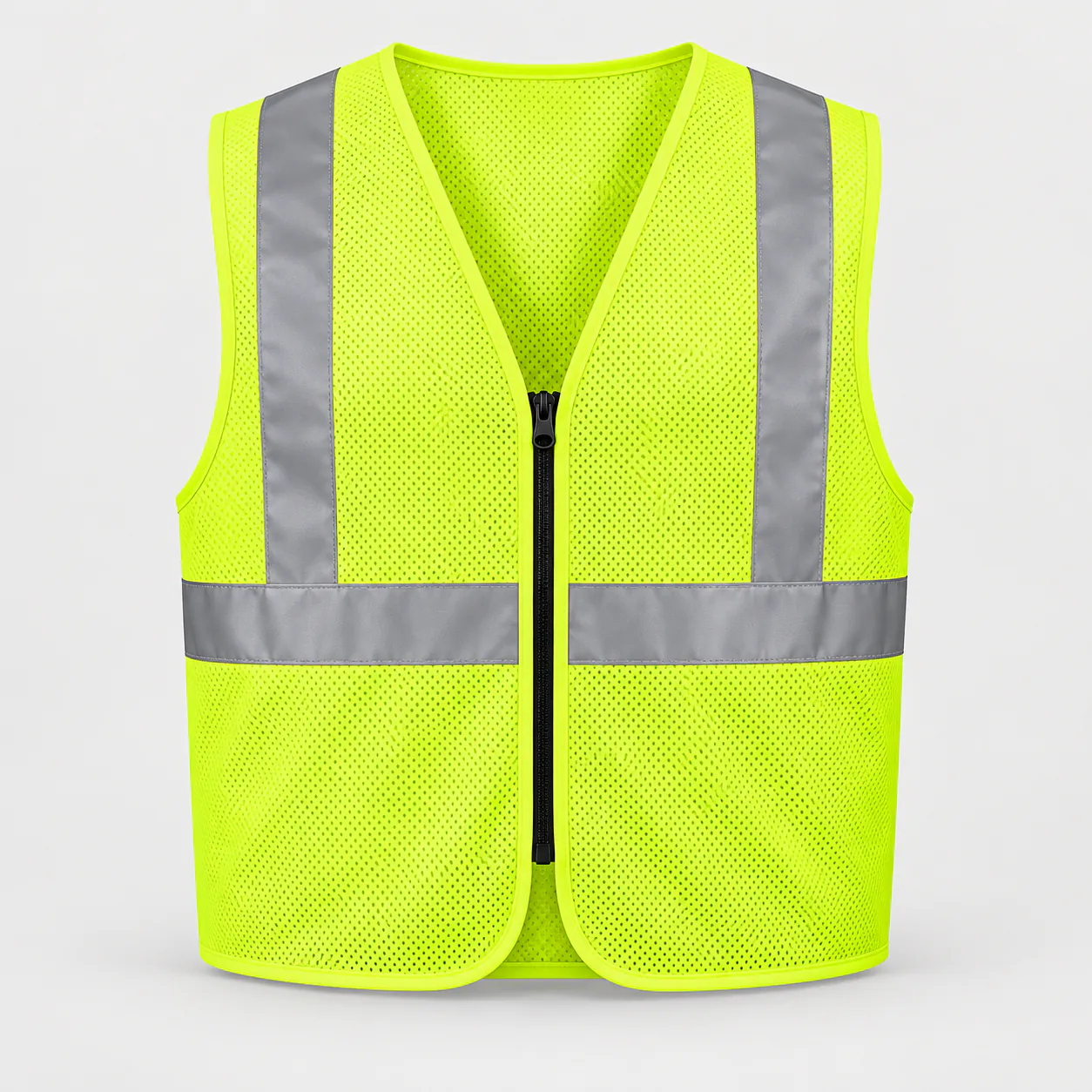
Class 2 Economy Mesh Vest
- Material
- 110–130 GSM mesh
- Use
- Warm Weather
Balance recognition, comfort and repeatable team branding across indoor and outdoor shifts.
Product recommendations are starting points. The buyer’s risk assessment, intended use and final product documentation determine the approved specification.
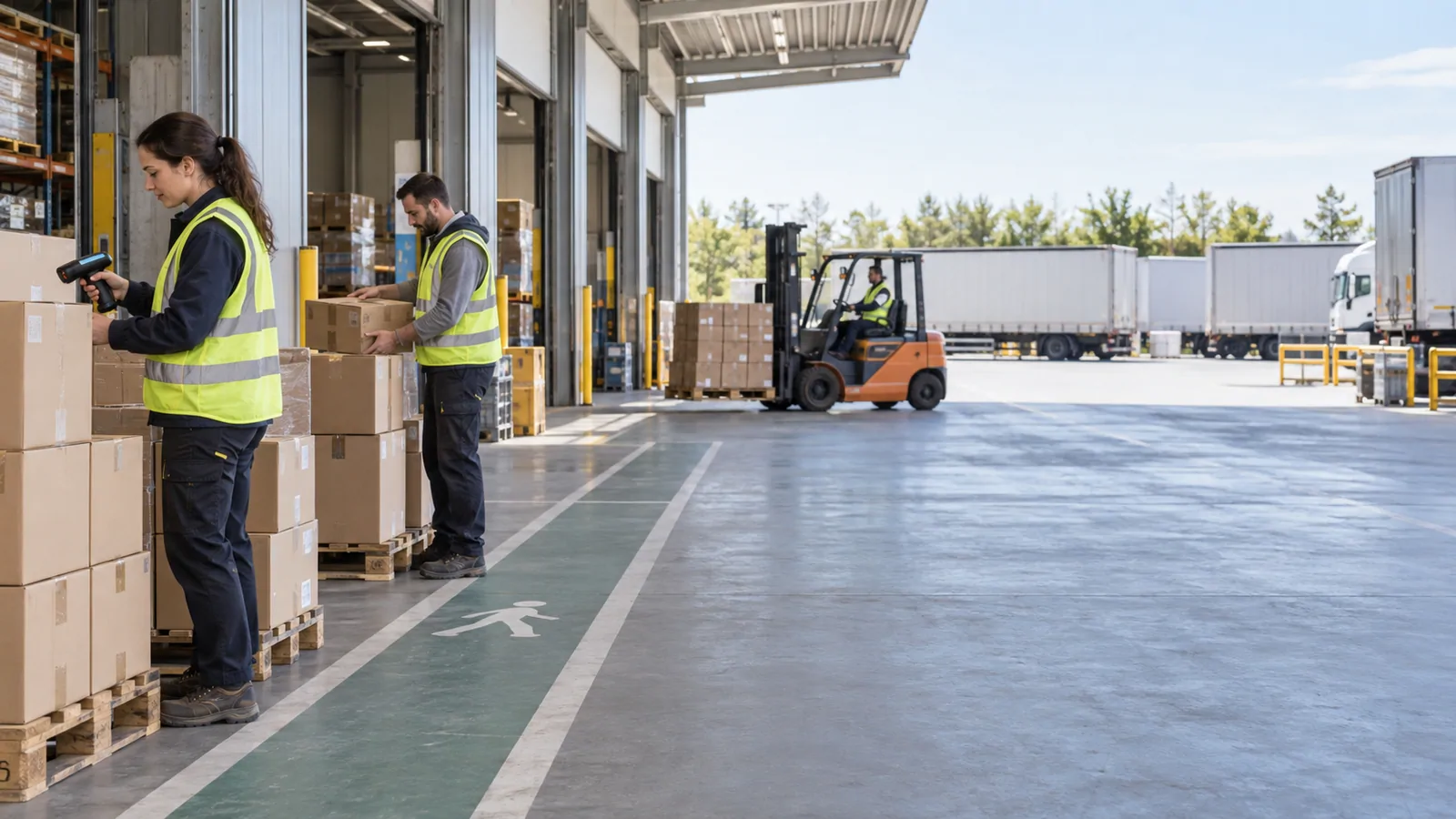
Warehouses, yards and docks mix pedestrians with forklifts, trucks and trailers. ANSI/ISEA 107 Type O garments, Performance Class 1, are intended for off-road settings such as warehouses and parking areas, where workers are not exposed to roadway traffic. Yards with truck movements may call for a higher class under the employer’s hazard assessment.
In Europe, EN 17353 covers enhanced-visibility equipment for some medium-risk roles, such as visitors, while EN ISO 20471 remains the standard for high-risk work. Cold rooms and outdoor docks need an insulated layer that still carries the required visibility.
| Role | Typical garment | Why |
|---|---|---|
| Picker or packer | Lightweight vest | Comfort over long shifts |
| Forklift operator | Vest with ID storage | Recognition, light kit |
| Yard marshal | Class 2 vest or jacket | Truck movements |
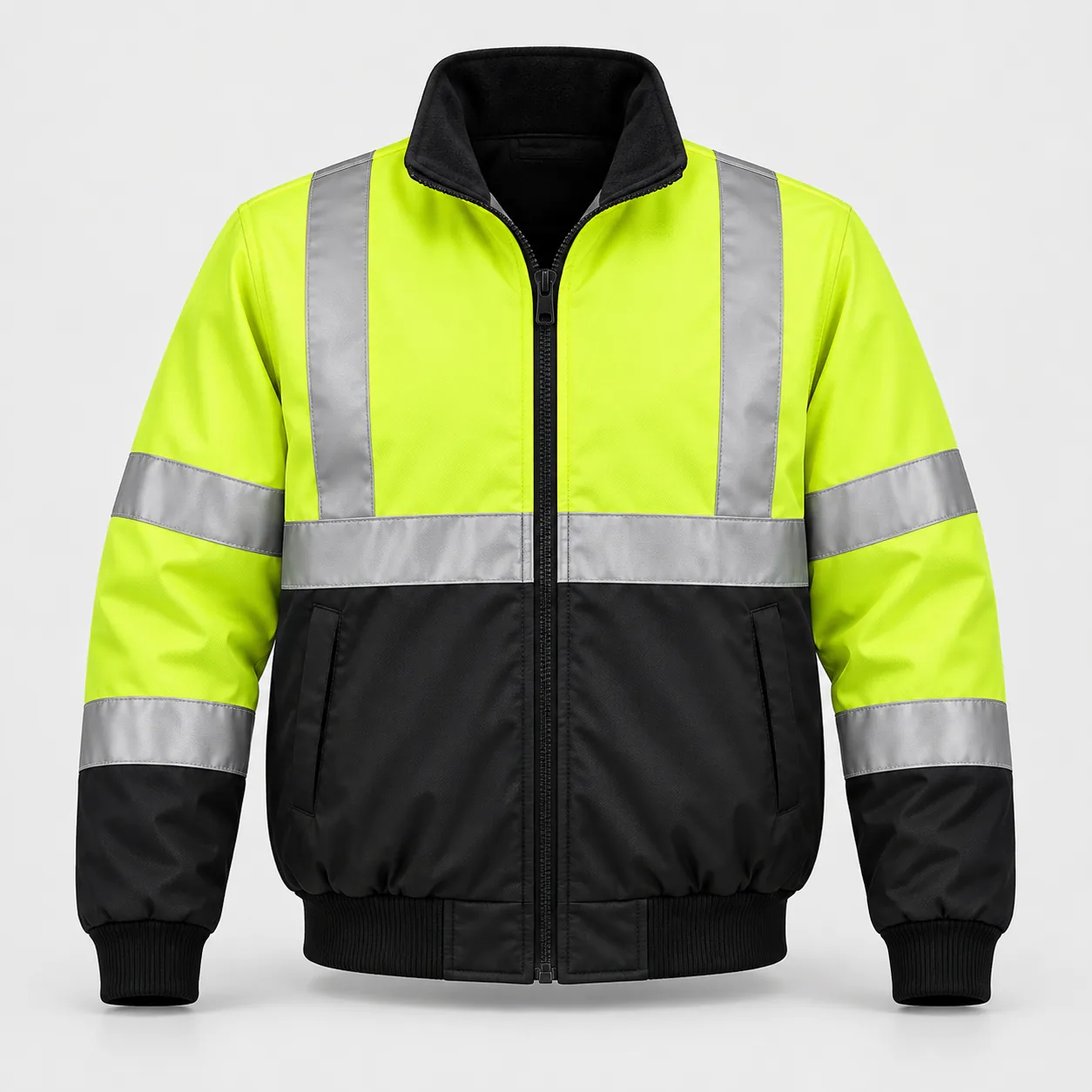
| Cold-room staff | Insulated hi-vis jacket | Outer layer carries class |
| Visitor | Enhanced-visibility vest | Short-stay identification |
Under ANSI/ISEA 107, Type O Class 1 garments are intended for off-road settings such as warehouses, where workers are not exposed to roadway traffic. Where trucks or roadway traffic are present, the employer’s hazard assessment may call for Class 2 or higher.
An insulated hi-vis jacket that carries the required class as the outer layer. A vest worn under a jacket is hidden, so choose a jacket with fluorescent background and retroreflective bands, or size the vest to fit over the jacket.
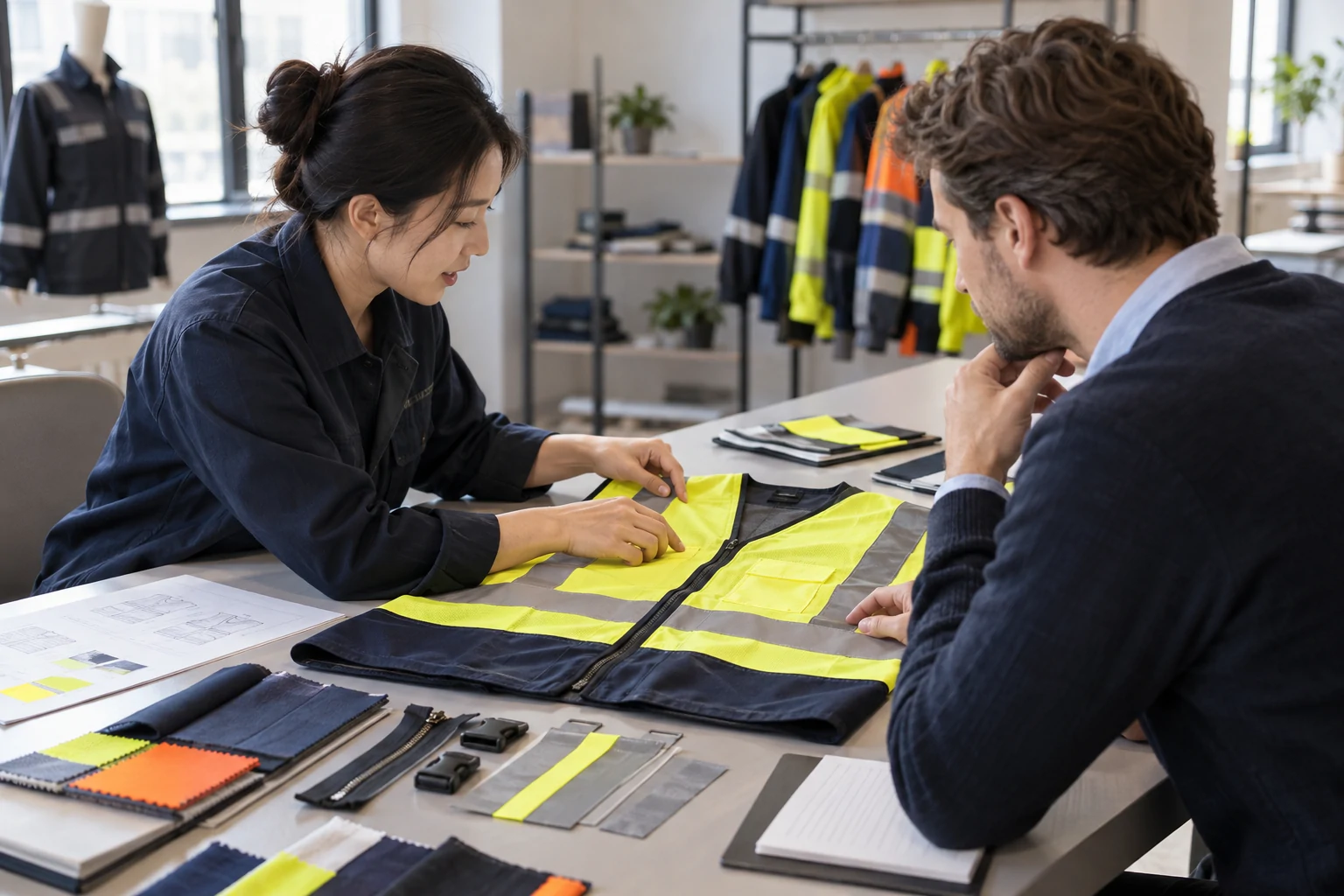
Logos can be added by heat transfer, screen print or embroidery on background fabric, clear of the bands. Team identification works best through trim, print or tape color while the body stays in a recognized fluorescent color.