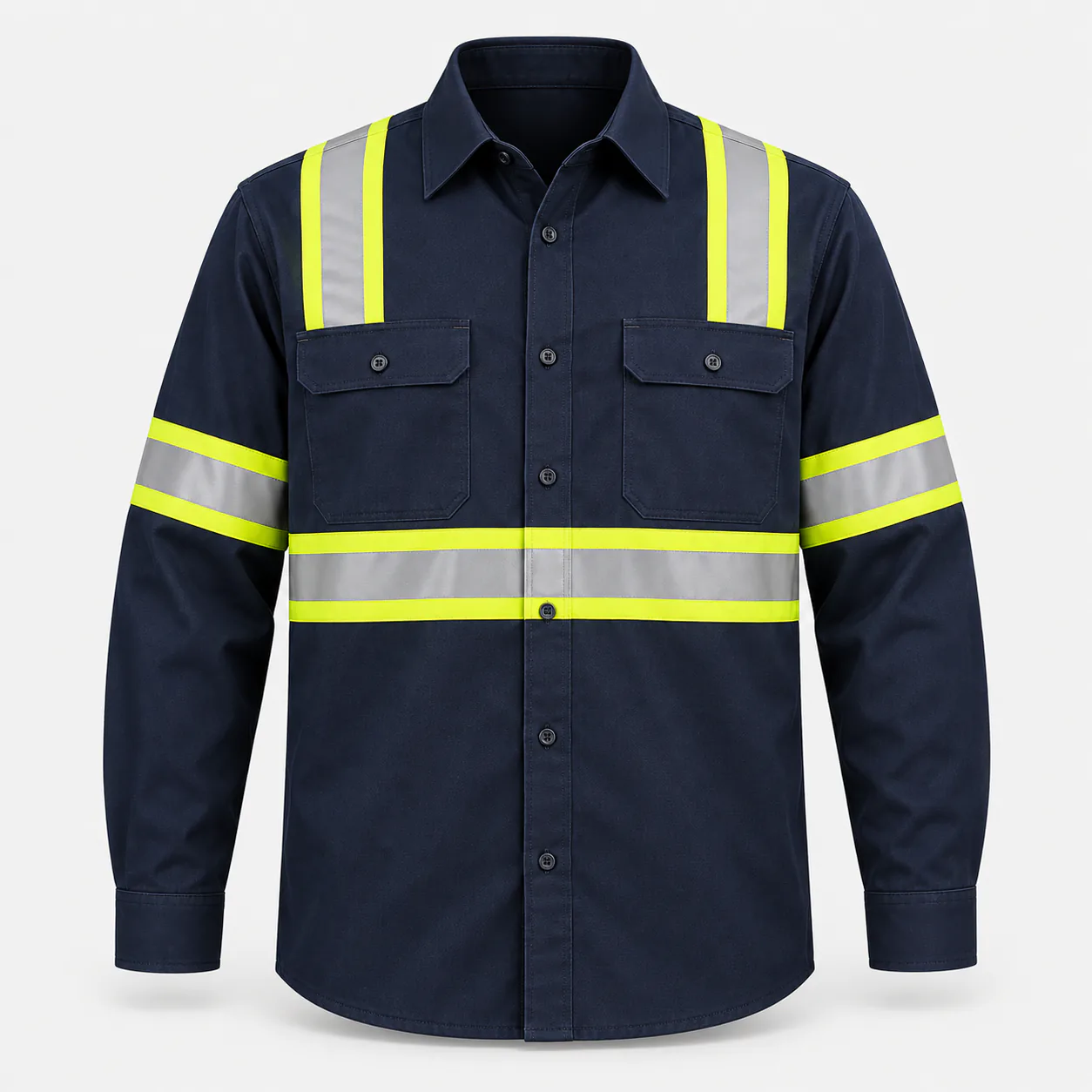
FR Button-Down Work Shirt
- Material
- FR cotton or aramid
- Use
- All Season
Start with the task risk assessment, then define coverage, materials and storage for the work environment.
Product recommendations are starting points. The buyer’s risk assessment, intended use and final product documentation determine the approved specification.
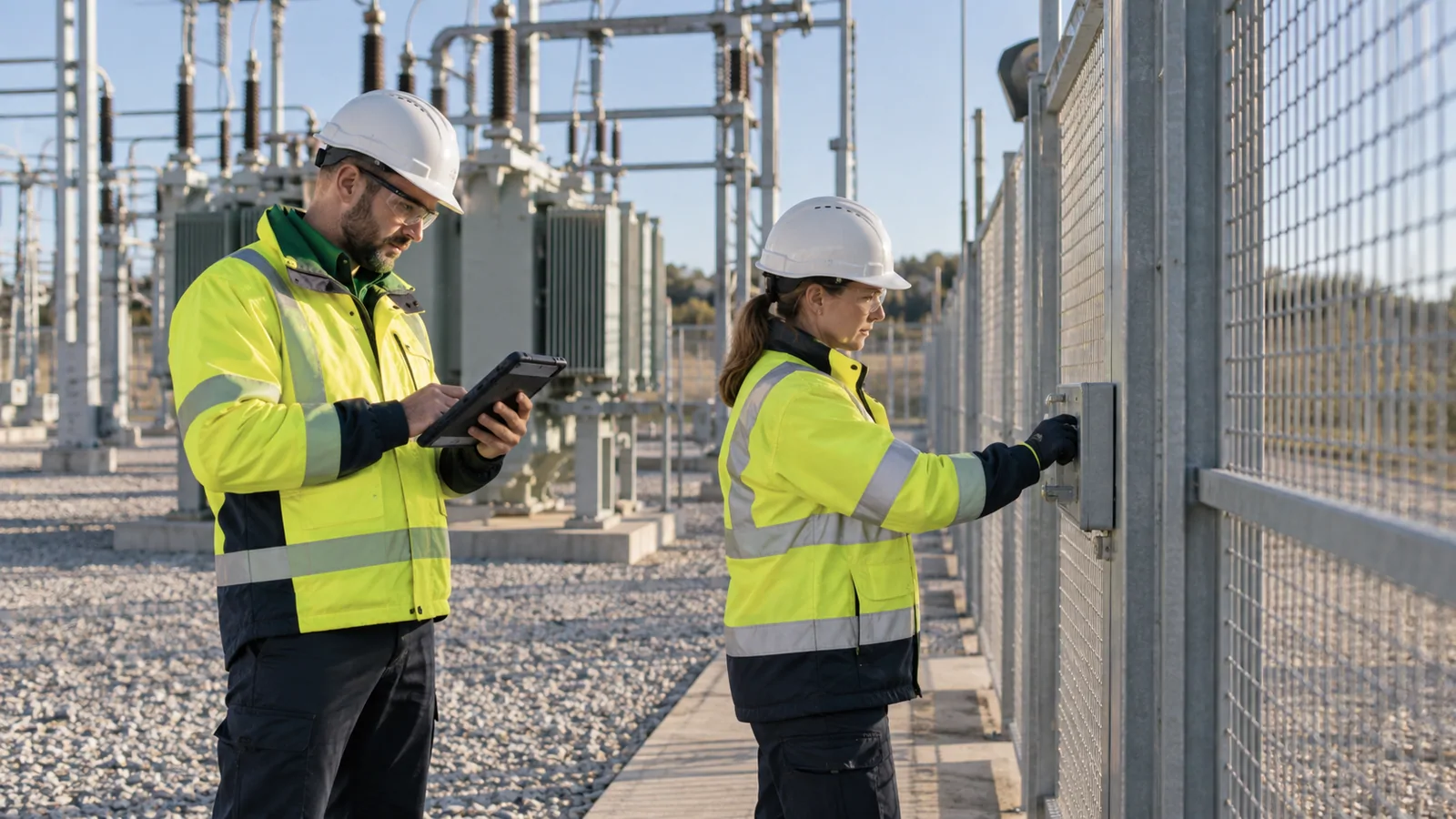
Utility crews work beside roads, near energized equipment and in changing weather. Roadside work within the right-of-way of a temporary traffic control zone falls under the MUTCD requirement for ANSI/ISEA 107 Class 2 or 3 apparel.
Where the hazard assessment identifies electric arc or flash fire, garments need flame resistance tested to standards such as ASTM F1506 or NFPA 2112 in the United States, or IEC 61482-2 and EN ISO 11612 in other markets. A hi-vis class does not make a garment flame resistant, and FR garments need FR-compatible tape, thread and trims.
| Role | Typical garment | Why |
|---|---|---|
| Field technician | FR hi-vis shirt | Arc or flash-fire exposure |
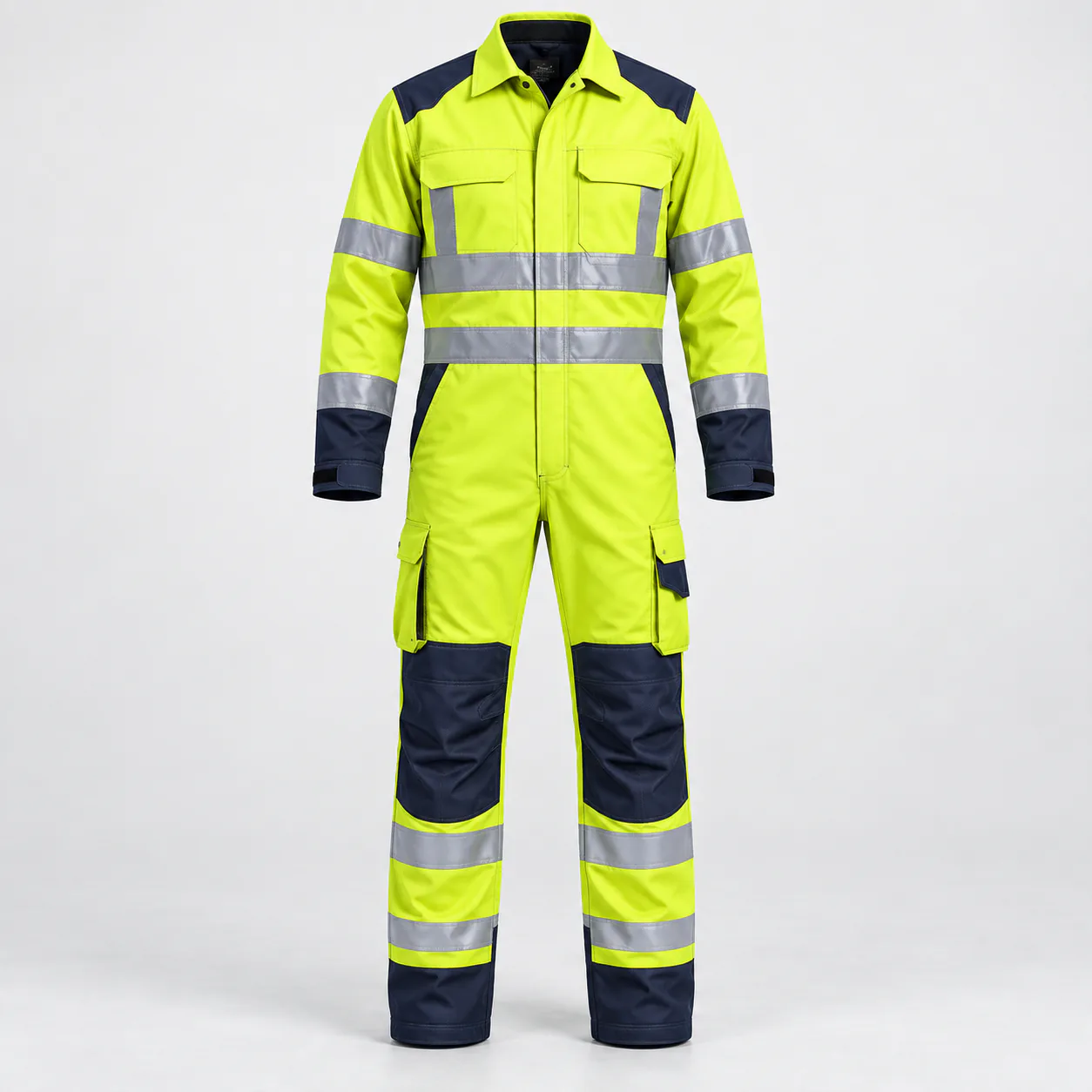
| Substation crew | FR coverall | Full coverage |
| Roadside crew | Class 2 or 3 outer layer | Traffic exposure |
| Inspector | Hi-vis vest with storage | Forms, radio, camera |
| Cold-weather crew | Insulated jacket, FR where required | Outer layer carries class |
When the hazard assessment identifies both traffic exposure and arc or flash-fire hazards, yes. The garment then needs a hi-vis class and FR performance, confirmed for the finished configuration, with FR-compatible tape and trims.
An outer layer worn over FR clothing should also be flame resistant, because a non-FR layer can ignite and keep burning. Use an FR hi-vis outer garment where both hazards apply.
Common examples are ASTM F1506 for electric arc and NFPA 2112 for flash fire in the United States, and IEC 61482-2 for electric arc and EN ISO 11612 for heat and flame in other markets. The hazard assessment decides which applies.