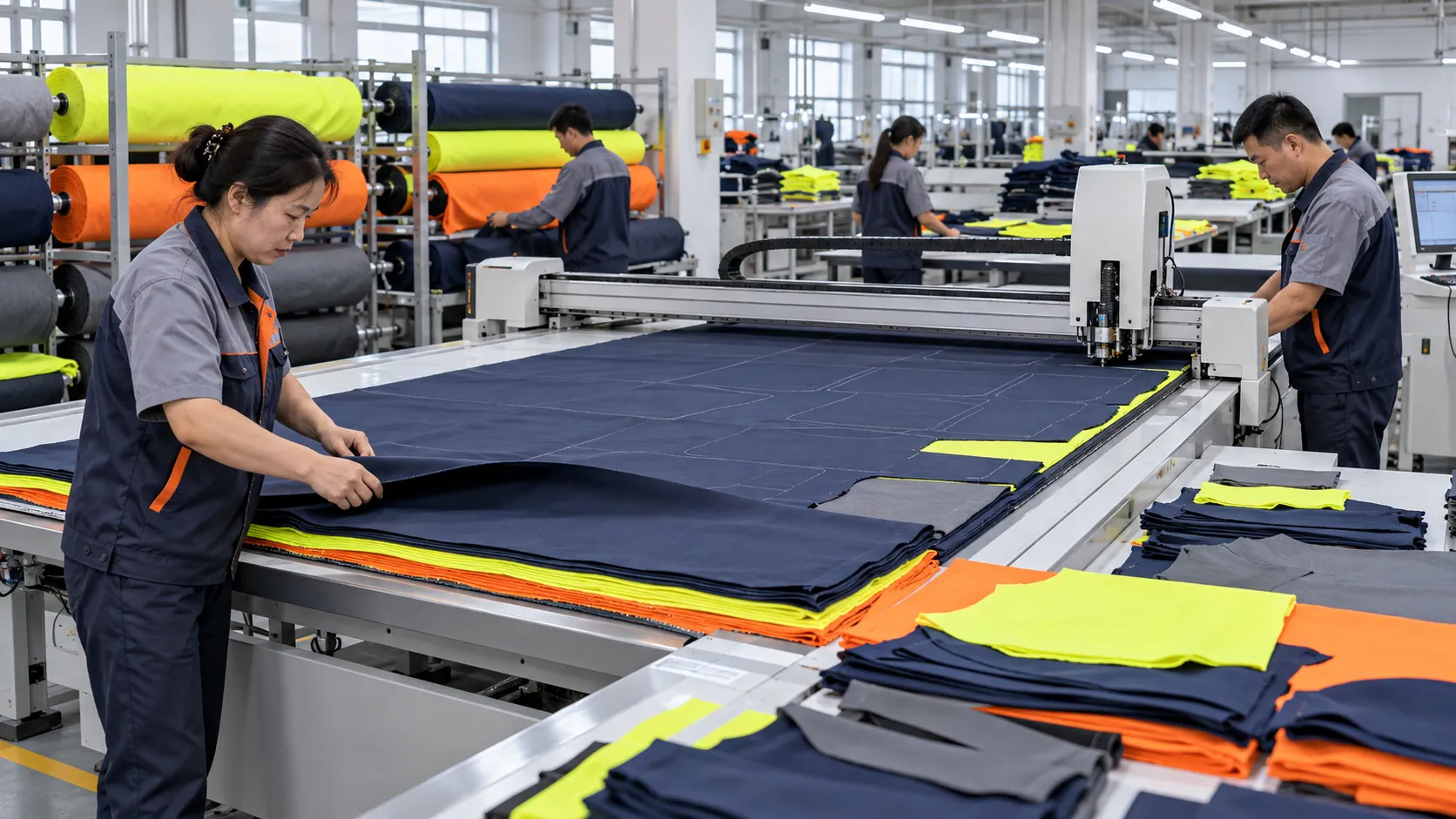
At Safvero, the standard factory MOQ is 100 pieces, and fully customized products have an MOQ of 300–500 pieces, depending on the approved specification. Where a custom order falls in that range depends on its least flexible input, usually a custom-dyed fabric, special tape or trims, or a new construction. Choosing existing colors, materials and a single logo method keeps an order closer to the standard route.
The two MOQ levels
Safvero works with two minimum order levels. The approved specification decides which one applies.
| Route | MOQ | Typical scope |
|---|---|---|
| Standard factory order | 100 pieces | Existing style and materials |
| Full customization | 300–500 pieces | New fabric, color or construction |
Why minimums exist
Minimums come from the inputs, not from the sewing line alone. Fabric is dyed and finished in batches, trims are produced in runs, and each new pattern, marker and sample takes setup work. When an order uses materials already in use, those costs are shared; when it needs its own dyed fabric or custom trims, the order has to carry them. That is why the least flexible input in a specification usually sets the minimum.
Custom color and fabric
A custom shade starts with a lab dip and needs its own dyed fabric batch, so the fabric's minimum often sets the garment minimum. The same applies to a new weight, weave or finish. High-visibility background also has to stay within the recognized fluorescent colors for the target standard. Pantone targets are reviewed against the material route. Choosing an existing hi-vis color and fabric keeps an order closer to the standard route.
Trims, tape and branding
Special zippers, custom-dyed binding, colored or printed reflective tape, woven labels, custom hangtags and printed packaging each carry their own supplier minimums. A logo applied by one method in one position is simpler than several methods across a range. Standard reflective tape and trims, with branding added by transfer, print or embroidery, usually keep the minimum lower than custom-made components.
What pushes an order toward full customization?
These inputs usually move an order from the standard route toward the full-customization range.
- A new garment construction or pattern.
- A custom fabric, weight, finish or dyed color.
- Custom reflective tape, binding or zipper colors.
- New pocket architecture or hardware.
- New grading, such as a women-specific size range.
- Several colors, logos or trims split across a small order.
Group options carefully
Splitting one order across many colors, fabrics or logos can turn a quantity that clears the minimum in total into several small lots that do not. Where possible, standardize the body color and fabric across roles and vary details that do not need their own material run, such as print color or label text. Ask for the minimum per color and per material, not only per order.
Confirm the specification behind the number
The final MOQ for a fully customized product depends on the approved material, construction, branding and packing decisions, which is why the range is 300–500 pieces rather than a single number. Send the specification with your inquiry and ask which inputs set the minimum. Samples and pre-production samples are confirmed case by case, so the sample route can be planned at the same time.
When the quantity is below the minimum
If your quantity is below the full-customization range, ask which parts of the specification drive the minimum and whether an existing style with branding added could meet the need. If the program will grow, share the forecast for repeat orders. It helps decide whether a custom fabric or color is worth setting up now, or whether the first order should use existing materials and move to custom ones later.
Ways to stay closer to the standard route
If the quantity is near a minimum, these choices usually help.
- Start from an existing catalog style.
- Choose an existing hi-vis color and fabric.
- Use standard reflective tape and trims.
- Apply branding by one method in one position.
- Limit color and material splits within the order.
Common questions
What is the minimum order for custom hi-vis vests?
At Safvero, the standard factory MOQ is 100 pieces. Fully customized products, such as a new fabric, color or construction, have an MOQ of 300–500 pieces, depending on the approved specification. Send the specification to confirm which route applies.
Why do custom colors have higher minimums?
A custom color needs a lab dip and its own dyed fabric batch, and that batch has a minimum of its own. The garment order has to cover it. Choosing an existing hi-vis color usually keeps an order on the standard route.
Can I split an order across several colors?
Yes, but each color or material can create its own minimum, because each needs its own fabric or trim run. Splitting a modest quantity across many colors can push the order toward full customization. Ask for the minimum per color and material when you plan the range.
Does adding a logo change the MOQ?
Logo methods such as heat transfer, screen print, embroidery and woven patches are part of Safvero's customization routes. Custom-made components, such as woven labels or special tape, can carry their own minimums. Ask which inputs set the minimum for your specification.
Turn the guide into a product brief.
Choose a product or send the requirement that still needs a recommendation.
Explore workwear