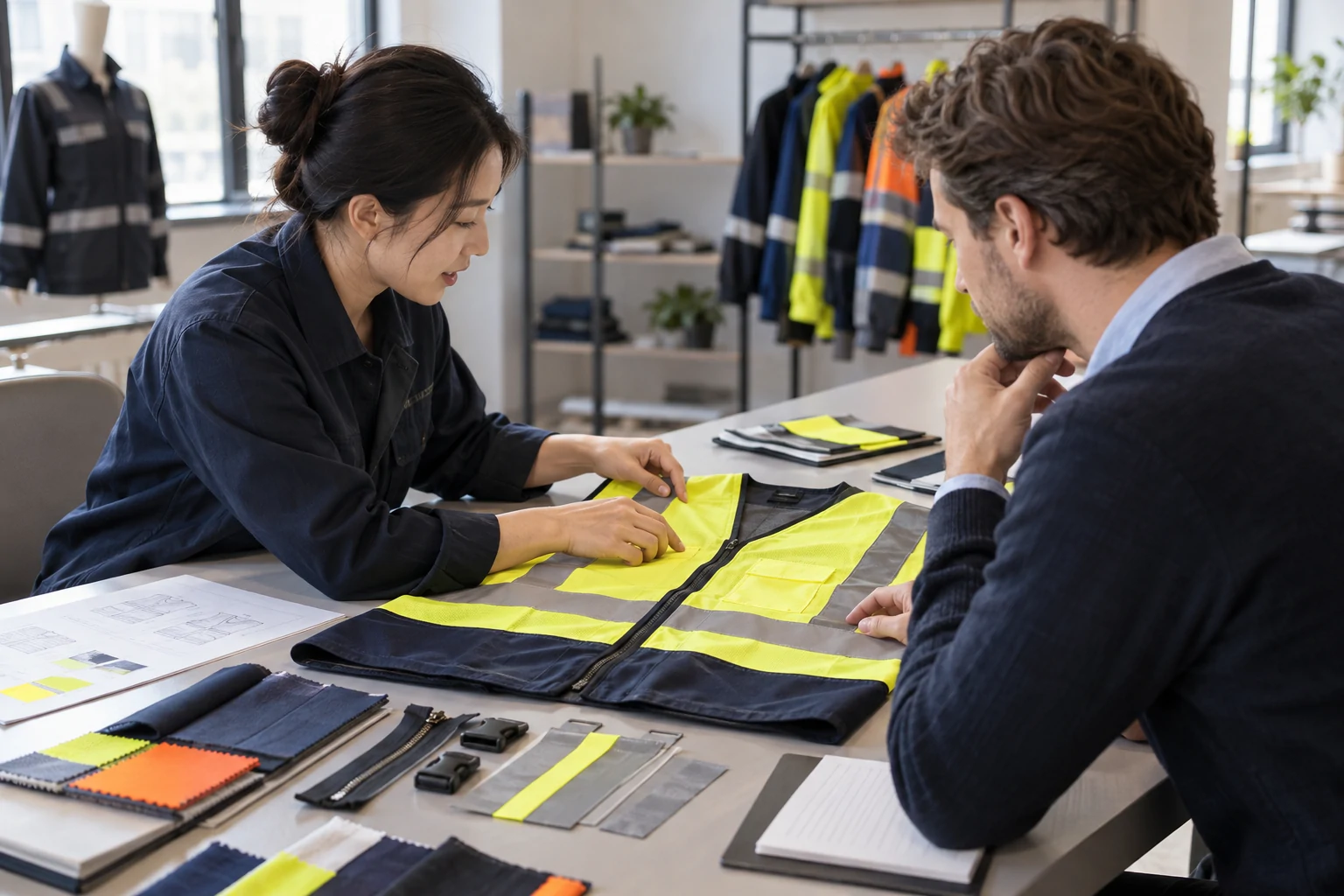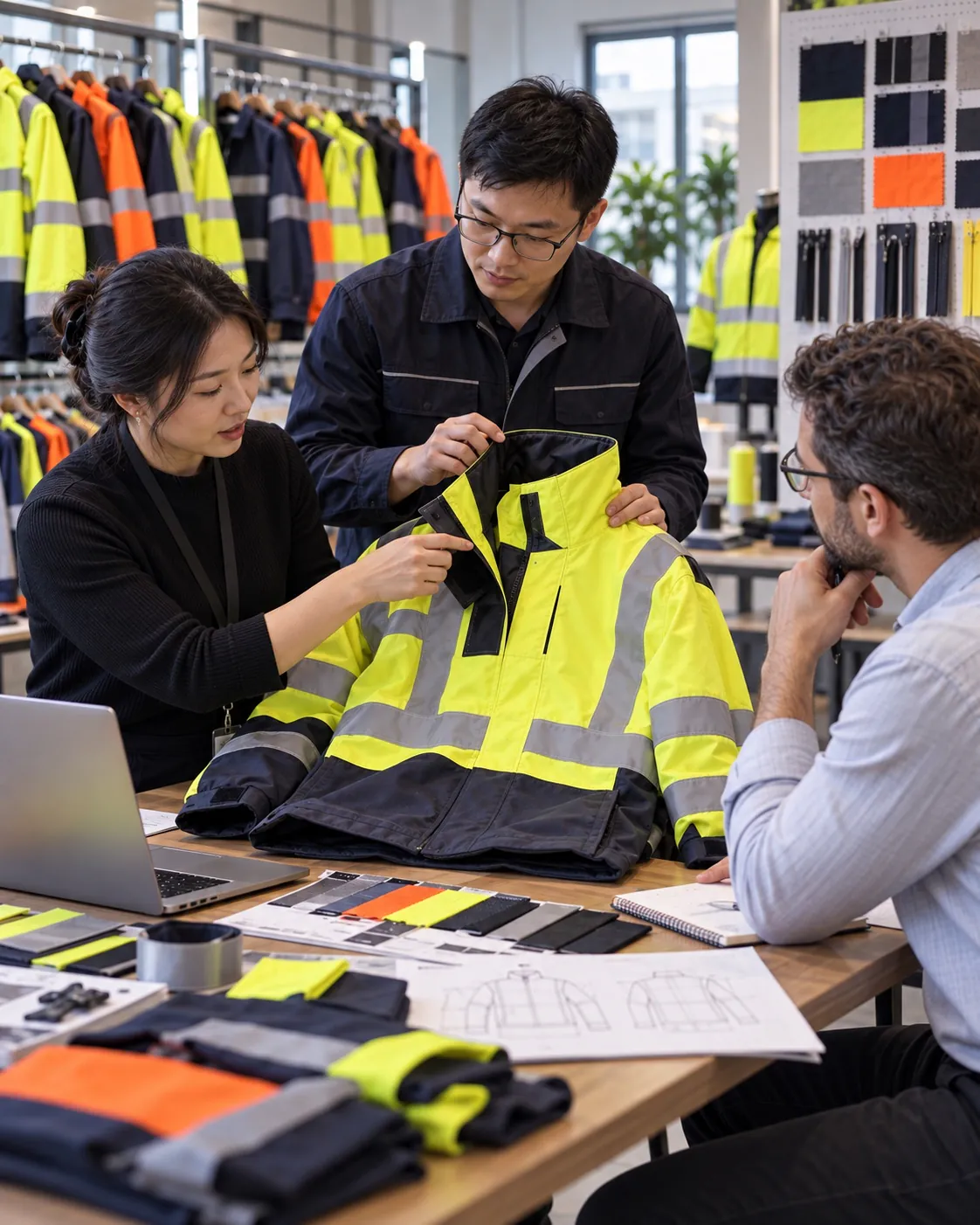
Send one written brief that covers the product and reference style, wearers and work environment, target market and required standard, quantity with a size breakdown, fabric and color, reflective tape, pockets, logo files, labels and packing, delivery destination and timing. Mark which points are fixed and where you want the manufacturer to recommend options. A complete brief produces a comparable quote and fewer sample rounds.
The RFQ checklist
Use this list to build the brief. Each item changes the garment, the price or the schedule.
| Item | Why it matters | Example |
|---|---|---|
| Reference style | Fixes the base garment | HV-V212 surveyor vest |
| Wearer and task | Drives pockets and fit | Road survey crew |
| Market and standard | Sets class and labels | ANSI/ISEA 107 Class 2 |
| Quantity and sizes | Sets the order route | Per style, color, size |
| Fabric and color | Affects MOQ and timing | Solid knit, hi-vis orange |
| Reflective tape | Affects layout and class | Segmented silver tape |
| Branding | Method and placement | Chest heat transfer |
| Labels and packing | Market rules | Bilingual care label |
Product and use
Name the garment type and a reference style if you have one, such as a catalog style or a garment you already buy. Describe the wearers, their tasks, the climate, shift length and the equipment they carry. These details decide fabric, pocket architecture, closures and fit more reliably than a feature list. If you want a recommendation, say so, and list the constraints it must respect, such as a required color or an existing garment the new one must match.
State the market and standard
Name where the garments will be sold and worn, and the standard or rule they must meet, for example ANSI/ISEA 107 Type R Class 2 for a US roadway crew, EN ISO 20471 Class 2 for an EU site or CSA Z96 for Canada. The standard sets minimum areas, colors, tape layout and labels, so it changes the design. List the documents you need with the goods. Classification is always confirmed for the finished configuration of the order.
Quantity, sizes and route
Give quantities for each style and color with a size breakdown. At Safvero, the standard factory MOQ is 100 pieces, and fully customized products have an MOQ of 300–500 pieces, depending on the approved specification. In-stock products ship within 7 days, customization of in-stock products is completed within 15 days, and full customization follows a 25-day schedule. Saying which route you expect helps the quotation reflect it.
Brand files and approvals
Attach production-ready files and name the people who approve them.
- Vector logo files with fonts converted to outlines.
- Pantone references for logo, trim and garment colors.
- Logo size and a placement drawing for each position.
- Label content, languages and any required standard markings.
- Packing method and carton-mark requirements.
- Names of the people who approve color, fit and artwork.
Commercial and delivery details
State the delivery destination, the date the goods are needed on site and whether a sample is needed before bulk production. Mention any inspection you plan and the documents that must travel with the shipment. Samples and pre-production samples are confirmed case by case through an inquiry, so ask for the sample route that fits your timeline when you send the brief rather than after the quotation.
Mark what is fixed and what is open
Separate decisions you have already made from those you want advice on. A fixed body color, an existing logo or a required class should be stated as requirements. Fabric weight, tape form or pocket layout can be left open with a note on what matters, such as airflow or storage. Clear boundaries let the manufacturer recommend options without guessing which details you will accept.
Make quotes comparable
If you send the brief to more than one supplier, send the same document to each and ask them to list their assumptions: fabric weight, tape type, logo method and size, packing and delivery basis. Differences in assumptions explain most differences in price. Ask each supplier to flag anything in the brief they would change and why, so you can compare their advice as well as their cost.
Common questions
What should a workwear RFQ include?
The garment type or a reference style, the wearers and tasks, the target market and standard, quantity per style, color and size, fabric and color, tape, pockets, logo files, labels, packing, delivery destination and required date. Mark what is fixed and where you want recommendations.
Do I need a finished design to get a workwear quote?
No. A reference style, a photo of a garment you use now or a clear description of the wearer, task and environment is enough to start. The manufacturer can recommend fabric, tape and pocket options, which you then confirm on a sample.
What logo file format should I send to a workwear manufacturer?
Vector files such as AI, EPS, PDF or SVG with fonts converted to outlines, plus Pantone references and the finished logo size for each placement. Vector artwork scales cleanly for screen print, embroidery digitizing and transfers.
How long does custom workwear take?
At Safvero, in-stock products ship within 7 days, customization of in-stock products is completed within 15 days, and full customization follows a 25-day schedule. Sample and pre-production sample arrangements are confirmed separately for each project.
Sources and further reading
ISEA: ANSI/ISEA 107-2020 high-visibility safety apparelISO 20471 overviewCCOHS: high-visibility safety apparel (CSA Z96)Turn the guide into a product brief.
Choose a product or send the requirement that still needs a recommendation.
Explore workwear