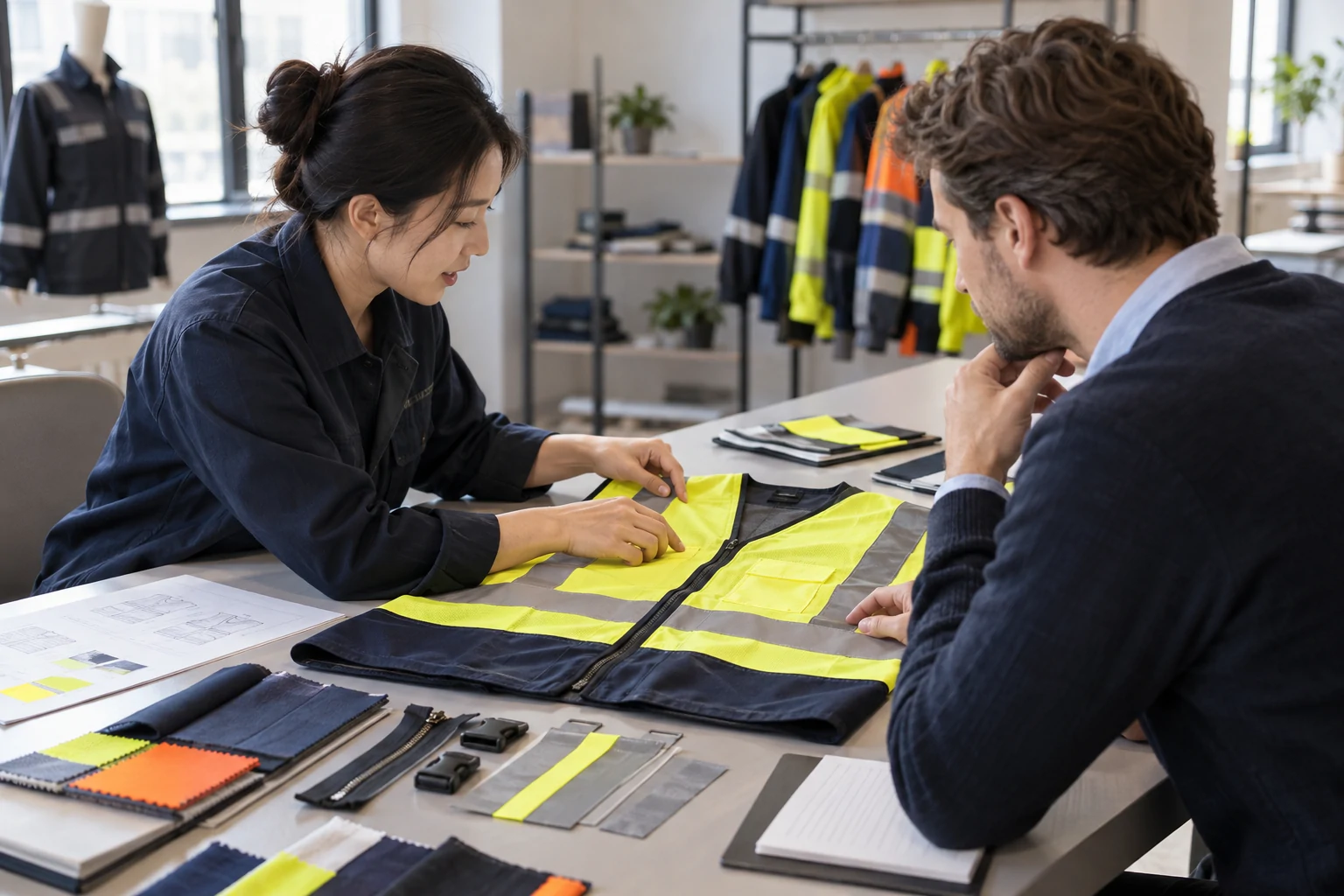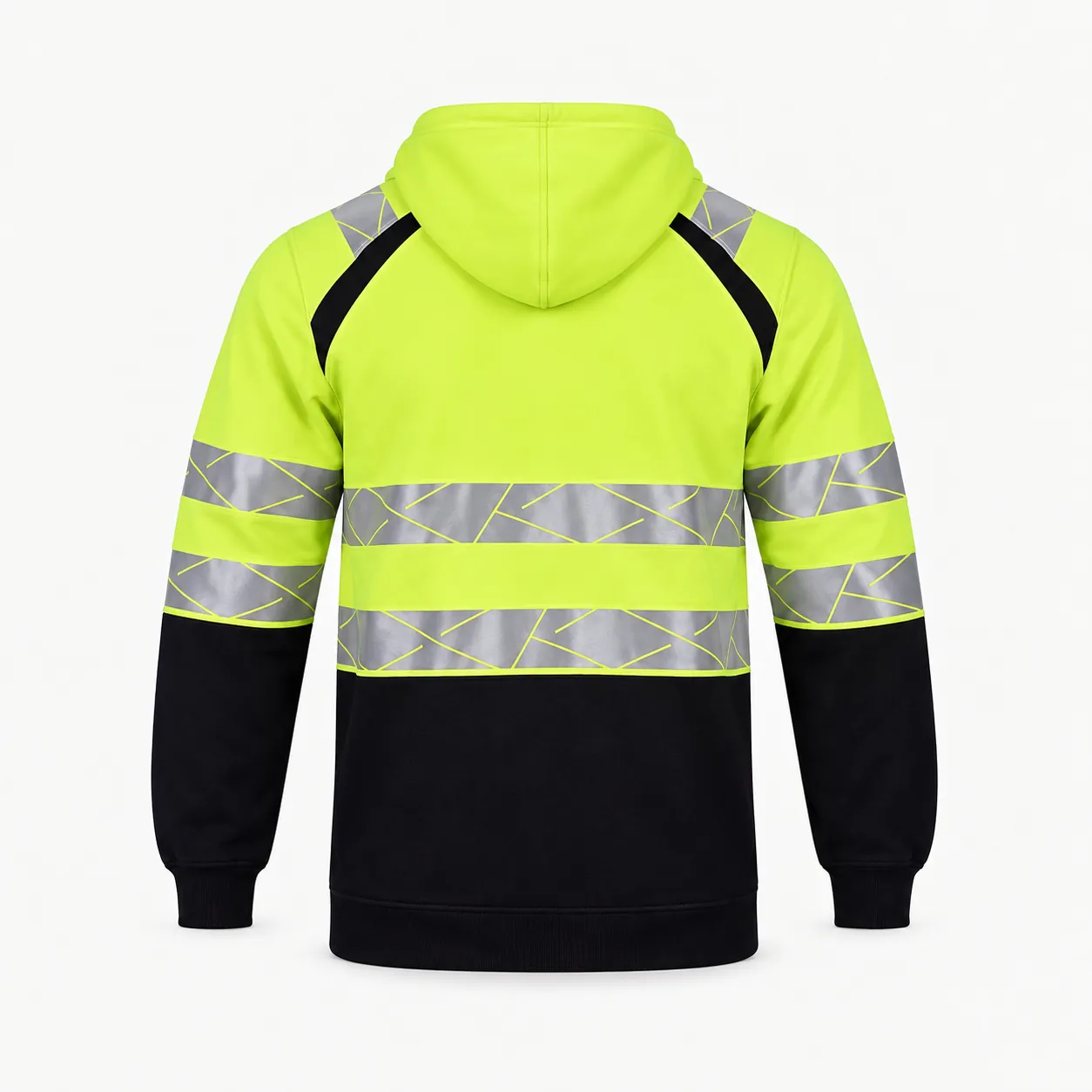
A women's hi-vis range needs its own measurements, grading and wear trials, not a smaller unisex size. Brief bust, waist, hip, shoulder width, torso and sleeve length and the layers worn underneath, then test the sample in working postures. In US construction, PPE must be selected to properly fit each affected employee, and the visibility class still has to hold in every size, including the smallest.
Why a smaller unisex size is not enough
Unisex patterns are usually graded from a male block. Scaling them down shortens everything in proportion, so the shoulders can stay too wide while the hips are too narrow and the bust pulls the front open. On a vest, that means riding up, gaping or hanging away from the body. On a jacket, sleeves can be too long and the hem can sit at the wrong height for a tool belt. Poor fit is also a visibility problem, because a garment that rides up or hangs open shows less of its tape.
What should the measurement brief include?
Collect these measurements from the actual wearer group, taken over the layers worn at work.
| Measurement | Why it matters |
|---|---|
| Bust | Front closure and pocket height |
| Waist | Shaping and hem behavior |
| Hip | Hem width over trousers |
| Shoulder width | Armhole and strap position |
| Torso length | Coverage and tape height |
| Sleeve length | Cuff position with gloves |
| Height | Size designation |
Grading and the size range
Include the smallest and largest sizes the group needs, and decide how many sizes the range can carry. Grading rules should move pockets, tape and closures with the body rather than keep fixed positions. Under EN ISO 13688, size designation is based on body measurements such as height and chest girth and is shown in a pictogram, which makes it easier for wearers to choose. Record the finished garment measurements for each size in the specification.
Keep the visibility class across sizes
Shorter torsos and smaller sizes reduce the visible material. Under ANSI/ISEA 107, Class 2 needs at least 775 in² of background and 201 in² of retroreflective material, and only the smallest size in a range may use a reduced 540 in² background. EN ISO 20471 sets 0.50 m² and 0.13 m² for Class 2. Check that the tape layout and background area still meet the required class in the smallest women's size, after pockets and logos are added.
Run a structured wear trial
Ask wearers to complete normal tasks in the sample, over their usual layers, and record the answers for each size.
- Does the garment stay closed when bending and reaching?
- Do armholes and side seams rub over working layers?
- Can pockets be reached with a harness or tool belt on?
- Does the hem stay in place when seated in a vehicle?
- Do sleeves and cuffs work with gloves?
- Do the bands stay visible in every posture?
Fit is a PPE requirement
Under OSHA 29 CFR 1926.95(c), effective January 13, 2025, construction employers must ensure PPE is selected to properly fit each affected employee. In general industry, 29 CFR 1910.132 requires employers to assess hazards and select suitable PPE. ISEA's PPE fit initiative also calls attention to equipment that fits a diverse workforce. Women-specific sizes are a practical way to meet these expectations and to keep garments worn correctly for the whole shift.
Existing styles and a women's route
At Safvero, existing unisex styles remain identified as unisex until a separate women-specific pattern and sample route is approved. A women's development usually starts from a reference style, the measurement brief and the target size range, followed by fit samples and grading review. Samples and pre-production samples are confirmed case by case through an inquiry. Any change to fit, pockets or tape layout means the finished configuration, including its classification, is reviewed again.
Brief checklist for a women's range
Send these with the inquiry so the first fit sample is close to right.
- Roles, tasks and the equipment each role carries.
- Body measurements across the intended size range.
- Layers worn underneath in each season.
- Required standard, type and class.
- Current fit problems with the unisex garments in use.
Common questions
Do women need different hi-vis vests?
Many do. Unisex vests graded from a male block often fit poorly at the shoulders, bust and hips, so they ride up or hang open and show less tape. Women-specific patterns with their own grading improve fit and keep the bands in position.
What measurements are needed for women's workwear?
Bust, waist, hip, shoulder width, torso length, sleeve length and height, taken over the layers worn at work. Collect them from the actual wearer group, and add finished garment measurements for each size to the specification.
Does a smaller hi-vis vest still meet the ANSI class?
Only if the finished garment meets it. Smaller sizes carry less material, and under ANSI/ISEA 107 only the smallest size in a range may use a reduced background area of 540 in² for Class 2. Check the smallest women's size after pockets and logos.
Is properly fitting PPE required by OSHA?
In construction, yes. Under 29 CFR 1926.95(c), effective January 13, 2025, employers must select PPE that properly fits each affected employee. In general industry, employers assess hazards and select suitable PPE under 29 CFR 1910.132.
Sources and further reading
OSHA 29 CFR 1926.95: criteria for personal protective equipmentOSHA 29 CFR 1910.132: general requirements for PPEISEA: PPE fit for allISEA: ANSI/ISEA 107-2020 high-visibility safety apparelISO 20471 overviewWorkwear wearer discussion: women’s fitTurn the guide into a product brief.
Choose a product or send the requirement that still needs a recommendation.
Explore workwear